
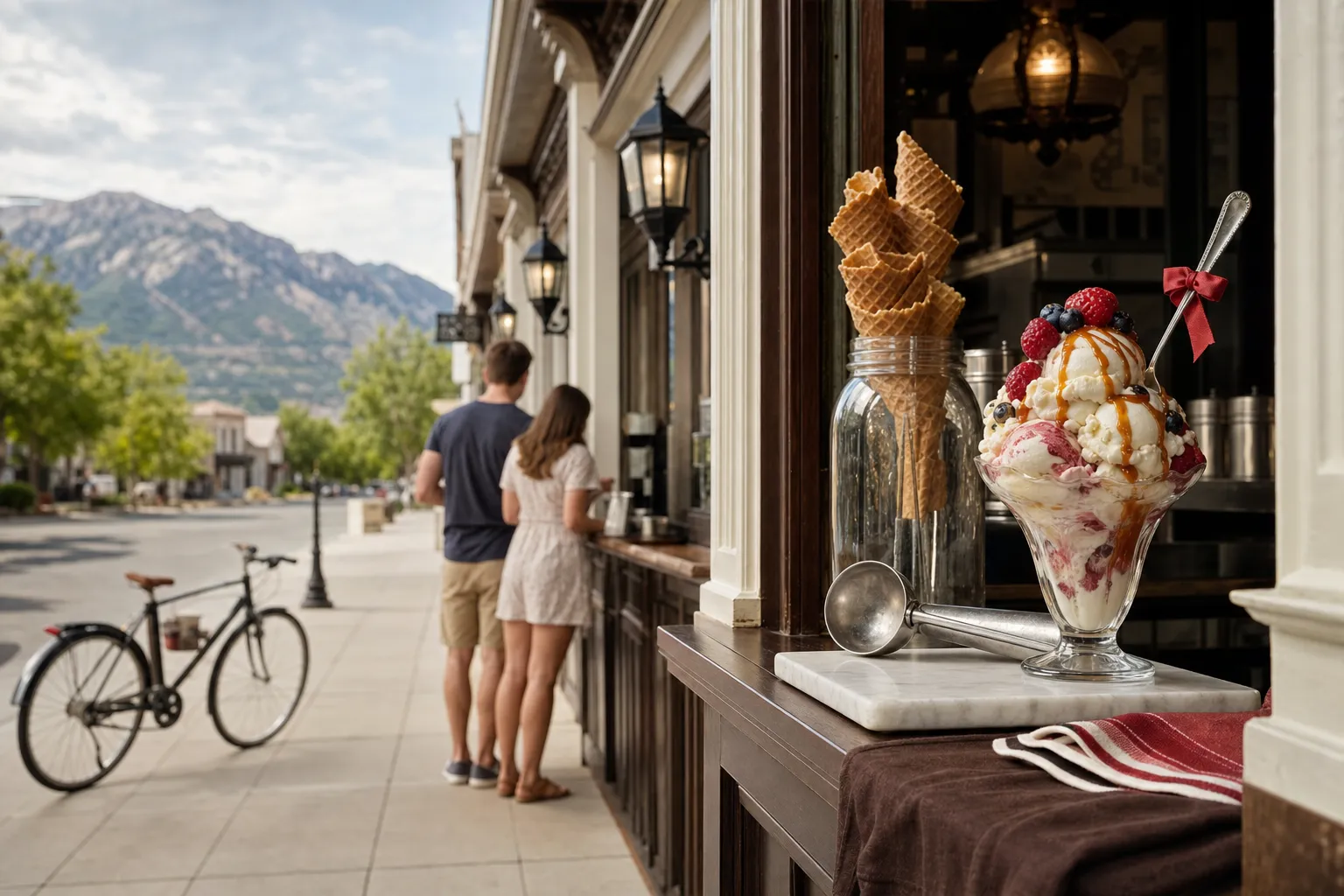
Start with a single scoop of a chunky, swirly flavor in a cup so you can focus on mouthfeel and fat level, and then move to a sundae or shake if you want added sauce and extras. That first scoop tells you most about texture and richness because it isolates the ice cream itself, letting you notice creaminess, iciness, mix ins and ribboned swirls.
What texture and richness mean for ice cream
Texture is how the ice cream feels in your mouth: smooth and velvety, light and aerated, icy and granular, or chunky with solid mix ins. Richness refers to flavor concentration and fat content that create a sense of thickness and lingering taste. Both traits shape whether a scoop feels indulgent, refreshing, or playful.
At Brooker's Founding Flavors Ice Cream we celebrate chunky, swirly flavors that pair bold mix ins with creamy bases. When you taste a single scoop here, you are tasting the fat level of our base, the amount and size of mix ins, and the way ribbons of sauce or custard are folded in.
Why this matters when you visit us in Bluffdale and Draper
Texture and richness change how people enjoy ice cream at family outings, birthday parties, school events and wedding dessert tastings. A light, airy sorbet style is easier to eat after a big meal, while a dense, high fat scoop works well as the star of a specialty sundae or cake pairing. Knowing what to try first helps you pick the right format for your occasion, whether you want a shareable sundae during a neighborhood outing or a custom cake for a celebration.
We serve Bluffdale and nearby communities including Draper, Sandy, Riverton, South Jordan, Herriman, Lehi and Salt Lake City, and we tailor sundaes, shakes and cakes so texture and richness suit each event.
Key concepts to notice on your first taste
- Creaminess. Fat and emulsifiers make the base feel smooth and coat the tongue.
- Body. Density or air gives a scoop weight. Heavier scoops feel more substantial.
- Ice crystals. Fine crystals feel silky. Coarse crystals make the ice cream feel gritty or icy.
- Mix ins. Chunks, nuts, cookies and fruit add chew and contrast to a creamy base.
- Swirls and ribbons. Fruit or fudge ribbons create pockets of concentrated flavor and a different texture from the base.
- Serving format. Cones can accent crunch, cups let you focus on the ice cream, sundaes add temperature and sauce contrast, and shakes change texture by thinning the base.
How we build texture and richness at Brooker's Founding Flavors
- Choose a base. We start with a high quality cream base that gives a naturally rich mouthfeel for our super premium offerings.
- Control overrun. We control how much air is whipped into the mix so some flavors are denser and some lighter, depending on the texture we want to highlight.
- Mix in the chunky stuff. Large fruit pieces, cookie chunks and candy bits are folded in by hand or machine so you get noticeable chew and contrast.
- Layer swirls. Ribbons of caramel, fudge or fruit are folded into the base to create pockets of concentrated flavor and a ribboned texture.
- Finish for service. Temperature and scooping technique matter. We keep display and service temperatures consistent so the ice cream releases cleanly from the scoop and textures show true.
What to try first and why
When you walk in and want to understand texture and richness quickly, follow this simple path. Each step is about narrowing variables so you can notice differences.
- Try a single scoop in a cup. A cup avoids cone crunch and keeps the focus on mouthfeel. Ask for a spoon rather than a cone to slow down tasting.
- Pick a chunky swirly flavor. Chunky mix ins plus ribbons reveal contrast between solid bits and the base, and show how richness holds up against added textures.
- Taste plain then with a swirl. If a flavor has a ribbon, taste both the base and a swirled bite to see how density and sweetness change perception.
- If you want more contrast, try a sundae next. A sundae brings sauce, warm toppings and whipped cream that highlight how richness reacts to temperature and added textures.
- Finish with a shake if you want to experience thickness. A milkshake shows how our base thins and carries mix ins as a drinkable dessert, and it reveals the base fat level differently than a scoop.
Choosing by occasion a quick comparison
| Format | What it shows about texture | When to choose it |
|---|---|---|
| Single scoop in a cup | Pure mouthfeel, fat level, crystal size and mix in contrast | Tasting, deciding on a cake flavor, or trying a new texture |
| Sundae | How richness holds up with sauce and temperature contrast | Family treats, birthday outings, sharing |
| Milkshake | How base thins and carries flavor; perceived thickness | On the go, kid friendly options, casual sharing |
| Cake | How ice cream flavors pair with cake crumb and frosting texture | Events and pickups where stability matters |
Pro tip: If you are choosing a flavor for a cake or a large sundae, taste a scoop first. A flavor that tastes delightfully rich by the spoonful may feel heavier when paired with frosting, so tasting ahead helps you pick a balanced combination.
How to read texture labels and menu notes
Menus and flavor descriptions will sometimes note words like ribboned, chunky, custard style or light. Use those clues.
- Ribboned or swirled means there will be concentrated streaks of sauce or jam.
- Chunky or loaded signals that large mix ins will provide bite and chew.
- Custard style or French style suggests a denser mouthfeel and higher egg or cream content.
- Light or low fat typically means more air and less lingering richness.
We list mix ins and rough texture cues on our ice cream board so you can pick a sample that matches what you want to taste first. If you are reading about flavors and textures later, our topic page on Texture And Richness goes deeper into how specific mix ins change mouthfeel.
Common questions people ask when testing texture and richness
Below are quick answers you can use when you are at the counter or planning an event.
- Should I taste two flavors at once? Yes, but taste them separately first. A cup for each sample helps you notice the differences before combining them on a cone or in a sundae.
- Does temperature affect richness? Yes. Colder temperatures mute sweetness and firm up fats. Slightly warmer service makes textures creamier and helps ribbons flow.
- What mix ins are easiest to judge? Cookie chunks and candied nuts show contrast clearly because they do not melt into the base right away.
- Can a milkshake tell me about richness? It can, but shakes add dilution. Use a shake to judge how a flavor carries when thinned, not as the first test of base richness.
Related services and pages worth reading
If you want to explore further, we recommend reading our page on Ice Cream to learn how base choices influence texture, and our page on Sundaes to see how toppings change perception. For planning purposes, our Ice Cream Flavors hub lists current inspirations and seasonal notes.
How texture and richness affect cakes and event desserts
When we adapt ice cream for cakes and pickups we consider stability, slicing and how the dessert will be served. Denser, lower air bases freeze firmer and slice cleaner inside a cake, while lighter bases provide an airy mouthfeel but can soften faster. If you are selecting a flavor for a pickup or event, tasting a single scoop of the candidate flavor is the best way to set expectations.
Key takeaway
Begin with a single scoop in a cup of a chunky, swirly flavor to learn most about texture and richness. From there, choose a sundae to see how the flavor behaves with sauces and temperature, or a shake to judge drinkable thickness. Tasting first helps you pick the right format for family outings, party cakes and special events.
Frequently asked questions
What is the easiest way to compare two textures?
Taste each flavor in its own cup, with a small spoon, before combining them on a cone or sundae. That isolates mouthfeel and lets you compare creaminess, ice crystal size and chunkiness.
Why do some scoops seem richer even if they taste similar?
Perceived richness comes from fat content, sugar level and how much air is whipped into the mix. A denser base with less air will feel richer than a lighter base even at the same flavor intensity.
Will a mix in change the perceived richness?
Yes. Large chocolate chunks, nuts or caramel pockets change how the base feels by adding chew and concentrated bites of fat or sugar. Mix ins can make a light base feel more substantial.
How should I test flavors if I am choosing a cake filling?
Taste a scoop of the flavor plain, then imagine it between layers of cake or frosting. Denser bases freeze and slice better inside a cake, so if you want clean layers, prefer denser options.
Learn more and plan your visit
Read customer reviews, check directions, and see what customers are saying on our Google Business Profile to get a sense for visits from Bluffdale, Draper and nearby communities. For deeper reading on flavors and serving formats, see our pages about Ice Cream Flavors, Cakes and Cone And Cup Choices.
Brooker's Founding Flavors Ice Cream, Bluffdale UT welcomes families, event hosts and dessert lovers who want to explore bold, chunky, swirly flavors in a colonial style shop.